Falling Through the Cracks: What Happens to New Yorkers the Moment PrEP Stops Working

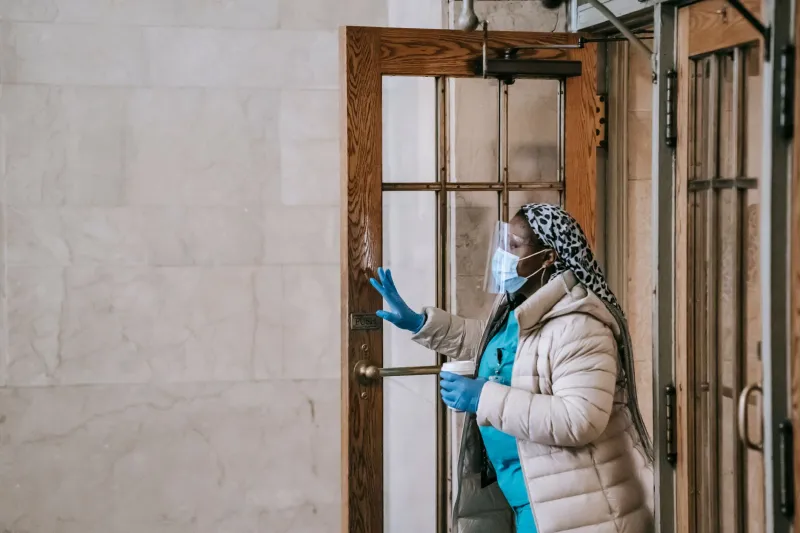
Photo: Lu Zhi, CC0, via Wikimedia Commons
There is a moment that many newly diagnosed New Yorkers describe in nearly identical terms: the appointment where a provider confirms their HIV-positive status, hands them a referral slip or a phone number, and sends them out into a city of eight million people to figure out the rest. The prevention system that had, until that moment, been their medical home—the clinic that dispensed PrEP, conducted regular STI screenings, and offered a familiar face—is suddenly no longer the right setting for their care. And the treatment system waiting on the other side is, for far too many, a stranger.
This is the transition gap. And in New York City, it is costing people their health, their stability, and in some cases, their lives.
The Architecture of a Broken Handoff
New York City has invested substantially in PrEP access infrastructure over the past decade. Community health centers, sexual health clinics, and LGBTQ+-focused organizations have built robust networks for prevention-focused care. These environments are often deliberately designed to feel low-barrier and affirming—walk-in hours, sliding-scale fees, staff trained in sexual health navigation. For many New Yorkers, especially those in communities most affected by HIV, these spaces represent their primary point of contact with the healthcare system.
But PrEP clinics are not, by design or by funding, HIV treatment centers. When a patient receives a new diagnosis, many providers at these sites are operating at the edge of their clinical scope. Referrals get made. Phone numbers get written down. And then, too often, the connection breaks.
The gap between a referral and an actual first appointment at an HIV treatment clinic can stretch from days into weeks. During that window, a newly diagnosed person is navigating not only the emotional shock of their diagnosis but also an entirely new bureaucratic landscape: different insurance authorizations, unfamiliar providers, new medication protocols, and in many cases, the abrupt loss of the care team that had become familiar and trusted.
Research consistently demonstrates that delays in initiating antiretroviral therapy following diagnosis lead to worse long-term health outcomes. Yet the structural design of New York's prevention-to-treatment pathway creates precisely those delays—not through malice, but through institutional fragmentation.
The Emotional Whiplash No One Prepares You For
Beyond the logistical failures, there is a psychological dimension to this transition that the healthcare system largely fails to address. PrEP care is, by its nature, oriented around risk reduction and empowerment. Patients in PrEP programs are often positioned as active agents in their own prevention—making informed choices, adhering to a regimen, engaging with their health proactively. It is, for many, a framework that feels affirming.
A new HIV diagnosis can shatter that framework overnight. The shift from prevention patient to treatment patient carries with it layers of internalized stigma, grief, and fear that do not resolve on their own. And yet the standard transition process—a referral slip, a phone number, perhaps a brief conversation with a social worker if the clinic has one—offers almost no psychological scaffolding for that shift.
What newly diagnosed individuals frequently describe needing most in those first days and weeks is not only clinical information but human continuity: a person who knows them, who can walk with them from one system to the next, who can help them understand that a diagnosis is not a defeat. Peer navigators, patient advocates, and care coordinators trained specifically in transition support can provide exactly that. In New York City, such programs exist—but they are inconsistently funded, unevenly distributed across boroughs, and largely invisible to patients who don't already know to ask for them.
What Gets Lost in the Referral
The referral slip model of care transition is, at its core, an act of institutional hand-washing. It transfers the burden of navigation onto the patient at precisely the moment when that burden is most crushing. For New Yorkers with stable housing, flexible work schedules, English proficiency, and familiarity with the healthcare system, navigating that transition is difficult. For those without those advantages—which describes a disproportionate share of the city's newly diagnosed population, particularly Black and Latino New Yorkers in the Bronx, Brooklyn, and Harlem—it can be functionally impossible.
Insurance coverage lapses during transitions. Medicaid redeterminations, which have increased in frequency since the end of pandemic-era continuous enrollment protections, can interrupt coverage at the worst possible moment. Patients who were receiving PrEP through programs like the New York State PrEP Assistance Program may find that their coverage situation changes entirely post-diagnosis, requiring them to navigate ADAP (AIDS Drug Assistance Program) enrollment while simultaneously processing a new diagnosis.
None of this is accidental. It is the predictable outcome of a healthcare system that was built in silos, funded in silos, and evaluated in silos—where prevention metrics and treatment metrics are tracked separately, and the human being moving between them is no one's designated responsibility.
What Comprehensive Transition Support Actually Looks Like
Advocates and clinicians who have studied this gap are not without solutions. The components of effective transition support are well understood, even where they remain underfunded.
Warm handoffs—meaning direct, person-to-person introductions between a patient's existing provider and their incoming treatment team—dramatically improve engagement in care. They require coordination time and staffing resources, but they work. Peer navigation programs, in which people living with HIV guide newly diagnosed individuals through the initial phases of treatment engagement, have demonstrated consistent effectiveness in improving linkage to care and reducing time to viral suppression.
Co-located services, where prevention and treatment are offered within the same clinical environment, eliminate many of the structural barriers to transition. Several federally qualified health centers in New York City already operate this model. Expanding it, and ensuring it reaches communities in outer boroughs where HIV rates remain elevated, should be a policy priority.
Finally, the city's HIV care infrastructure must reckon honestly with the role of mental health support in successful treatment engagement. A newly diagnosed person who is not emotionally supported is a person at risk of disengaging from care entirely. Integrating behavioral health into the transition process is not a luxury—it is a clinical necessity.
The City We Claim to Be
New York has long positioned itself as a leader in the fight against HIV. That reputation is not unearned. But leadership requires more than building robust prevention infrastructure—it requires ensuring that the people prevention fails are not then failed again by the systems meant to treat them.
The transition gap is not a mystery. Its causes are documented. Its solutions are known. What it lacks is the political will and sustained funding to implement them at scale. For the New Yorkers who receive a diagnosis today and find themselves holding a phone number and a prayer, that gap is not an abstraction. It is the first test of whether this city truly means what it says about caring for all of its people.
They deserve to pass it.