The First Message, the First Date, the First Truth: HIV-Positive New Yorkers on Navigating Love in a Swipe-Right World

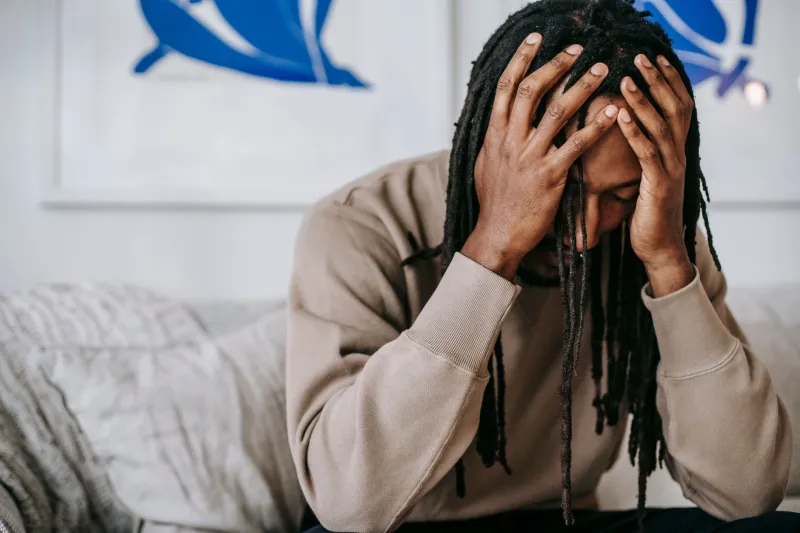
Photo by Photo by Olek Buzunov on Unsplash on Unsplash
There is a moment—familiar to nearly every HIV-positive person who has ever downloaded a dating app—that arrives somewhere between the first exchange of messages and the first suggestion of meeting in person. It is the moment when the question of disclosure moves from abstract to imminent. When the conversation has grown warm enough that silence begins to feel like concealment, but disclosure still feels like a risk whose dimensions are impossible to fully anticipate.
For Priya, a 34-year-old graphic designer who was diagnosed five years ago after a relationship ended badly, that moment used to arrive with a physical sensation she describes as "a kind of full-body dread." She would type and delete. She would let promising conversations expire. She would unmatch people she genuinely liked rather than face what came next.
"I wasn't afraid of their reaction, exactly," she said, sitting in a coffee shop in Jackson Heights, Queens, on a recent afternoon. "I was afraid of becoming, in their eyes, just the diagnosis. Like everything else I was would disappear."
Priya's experience sits at the center of a conversation that HIV-positive New Yorkers are having—on apps, in support groups, in therapy offices, and in the particular intimacy of community—about what it means to seek connection in a city that moves fast, judges quickly, and has not yet fully reckoned with what undetectable means for the calculus of risk and desire.
The App Landscape: Promise and Peril
New York City's dating app ecosystem offers HIV-positive singles both more visibility and more exposure than previous generations could have imagined. Platforms like Grindr have long allowed users to disclose their status and indicate their PrEP use directly in their profiles, creating a culture of upfront transparency in some segments of the gay and bisexual men's community that reduces the emotional labor of disclosure by making it a mutual, low-stakes exchange of information rather than a confession.
But that culture is far from universal, and it maps unevenly onto the app landscape as a whole. On mainstream platforms—Hinge, Bumble, Tinder—there is no designated space for HIV status, and the norms around disclosure are far less settled. For HIV-positive women, for heterosexual people of all genders, for bisexual individuals, and for people in communities where HIV stigma intersects with racial and cultural shame, the absence of established disclosure norms can make the decision feel newly fraught with each potential match.
"On some apps, I feel like I'm managing a secret," said James, a 29-year-old teacher from Flatbush, Brooklyn, who is Black, heterosexual, and HIV-positive. "And on others, I feel like if I say it upfront, I'm just handing someone a reason to swipe away before they've even met me."
James is not wrong about the risk. Studies consistently show that HIV stigma remains a significant driver of rejection in dating contexts, and that Black men who disclose their status face compounded stigma at the intersection of race and HIV status. The knowledge that rejection is a real possibility does not make navigating that possibility less painful.
When to Tell: The Ethics and the Emotions
The question of when to disclose is one that therapists who work with HIV-positive clients describe as among the most emotionally complex their patients face—not because the ethics are genuinely unclear, but because the emotional stakes are so high that clarity can feel beside the point.
From a public health and legal standpoint, New York State's HIV disclosure laws have evolved significantly over the past decade. New York decriminalized HIV exposure in 2023, removing outdated statutes that had long been criticized for discouraging testing and honest communication. The legal framework now reflects scientific consensus: a person who is on treatment and virally suppressed poses no meaningful risk of transmission to a sexual partner, and the law no longer treats HIV-positive individuals as presumptively dangerous.
But the emotional calculus of disclosure operates on a different timescale than legal reform. Many HIV-positive people carry internalized stigma that precedes and outlasts any policy change, and the fear of rejection—of being seen as damaged, risky, or less worthy of love—is not dissolved by a statute.
Therapists who specialize in this area generally counsel clients to disclose before sexual activity, but emphasize that the "right time" within a relationship arc is not fixed. Some clients prefer to disclose early, using it as a filter for partners who cannot offer the openness and education that a healthy relationship requires. Others prefer to build emotional connection first, disclosing once they feel secure enough to absorb a difficult response without it destroying their sense of self-worth.
"There's no universally correct answer," said Dr. Amara Osei-Bonsu, a licensed clinical social worker in Harlem who works extensively with HIV-positive clients. "What matters is that the person disclosing feels grounded in their own worth before they do it—that they're not asking for permission to be lovable. They already are."
The Rejection That Changes You
Almost everyone interviewed for this article had a story about a rejection that stung in a particular way—not the ordinary sting of romantic disappointment, but something sharper, more personal.
For Sofia, a 45-year-old Puerto Rican woman from the Bronx who has been HIV-positive for twelve years, the worst rejection came not from a stranger but from a man she had dated for two months before disclosing. "He didn't yell. He didn't say anything cruel," she said. "He just went very quiet and then said he needed time to think. And then he never called again."
She spent the following months in what she describes as a kind of romantic hibernation, convinced that the diagnosis had permanently narrowed what was possible for her. It was a support group at a community health center—one where she met other HIV-positive women who were in relationships, who were desired, who had built full romantic lives—that began to shift her perspective.
"Seeing other women who looked like me, who had been through what I'd been through, and who were loved—that was more powerful than anything a therapist could have told me," she said.
Community, in this sense, functions as a form of evidence. It counters the isolating narrative that a diagnosis makes intimacy impossible by making the counter-evidence visible and human.
U=U and the Conversation It Enables
For many HIV-positive New Yorkers, the scientific consensus captured in the phrase Undetectable Equals Untransmittable—U=U—has meaningfully changed the landscape of disclosure conversations. Knowing that viral suppression eliminates transmission risk provides a concrete, evidence-based response to a potential partner's fear, replacing speculation with fact.
But advocates caution against treating U=U as a disclosure shortcut that bypasses the emotional work of the conversation. A partner who understands the science may still carry stigma-informed feelings that science alone cannot address. And for HIV-positive people, the conversation is rarely only about risk management—it is also about being known, fully, by someone who chooses to stay.
"U=U is liberating," said Marcus Webb, a community organizer with a Lower East Side HIV advocacy organization who is himself HIV-positive. "But the conversation isn't just about transmission. It's about intimacy. It's about trust. It's about letting someone see something that the world has told you to hide."
Finding Your People, Finding Yourself
Across the interviews conducted for this article, one theme recurred with enough consistency to feel like a finding: the HIV-positive New Yorkers who described the richest, most resilient romantic lives were those who had done sustained work—in therapy, in community, in honest conversation with people who shared their experience—to disentangle their sense of worth from their diagnosis.
Priya, who once unmatchéd men she liked rather than face disclosure, is now in a relationship with a man she met on a mainstream app. She disclosed on the third date, after a conversation about their respective health histories that she had initiated deliberately. He asked questions. He looked things up. He came back.
"He said, 'I had to decide if I was scared of you or scared for you, and I realized I wasn't either,'" she recalled. "That's what I'd been waiting to hear. Not from him specifically—from anyone. That I wasn't something to be managed or survived. Just someone worth knowing."
For newly diagnosed New Yorkers re-entering the dating world, that is perhaps the most important thing to hold: the diagnosis is a fact about your health. It is not the whole story of who you are or what you deserve.