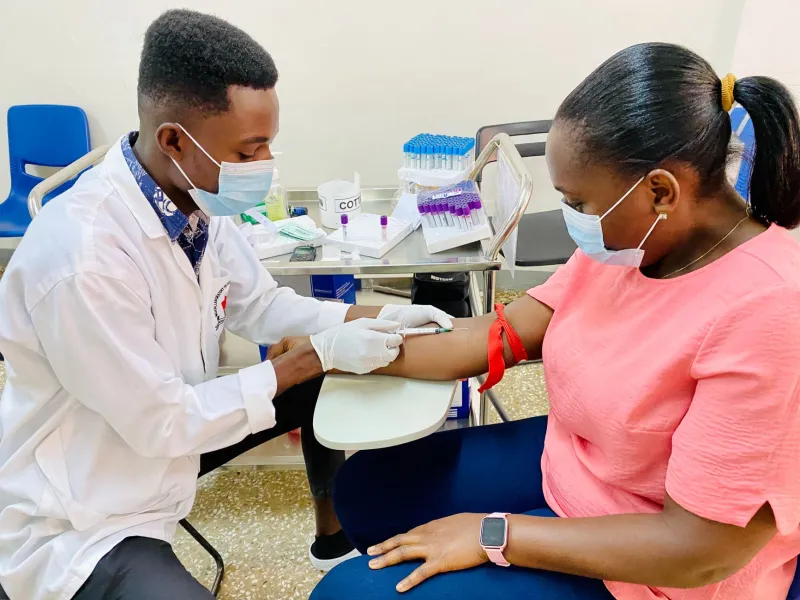
Scrubs Don't Erase Stigma: HIV-Positive Healthcare Workers in NYC Are Still Forced to Choose Between Their Status and Their Careers
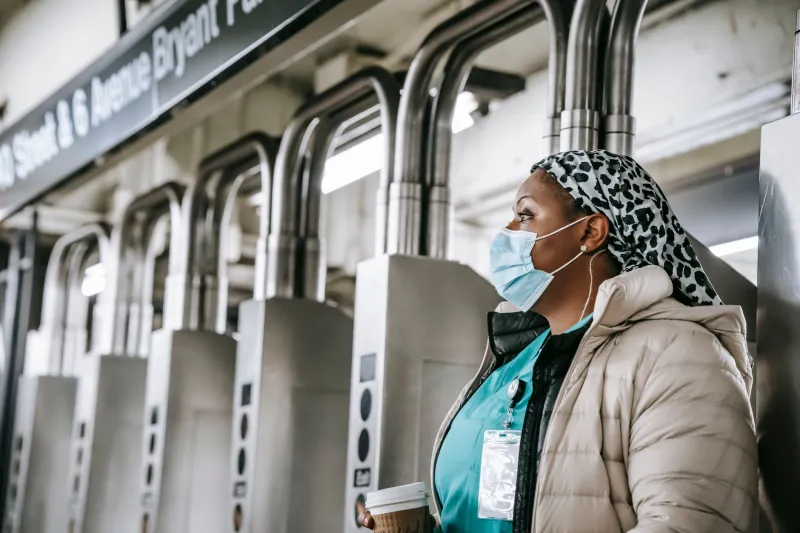
In a city that has long positioned itself at the forefront of HIV advocacy, New York's healthcare institutions carry a particular responsibility. They are the places where people living with HIV come to receive compassionate, evidence-based care. They are also, for a significant number of HIV-positive professionals, environments where disclosure feels more dangerous than silence.
The contradiction is not subtle. And for those living inside it, it is exhausting.
A Legal Framework That Exists on Paper
Under the Americans with Disabilities Act, the New York State Human Rights Law, and New York City's own Human Rights Law, HIV status is classified as a protected disability. Employers — including hospitals, clinics, and medical practices — are legally prohibited from discriminating against workers based on that status. Reasonable accommodation is required. Termination based solely on a positive diagnosis is unlawful.
Yet legal protection and lived experience are not the same thing. Healthcare workers who have spoken with AIDS NYC describe a persistent gap between what the law guarantees and what actually unfolds when HIV status becomes known in a clinical workplace.
"I've worked in emergency medicine for eleven years," said one nurse who asked to be identified only by her first initial, M., to protect her employment. "I know the law. I know the science. I also know what happened to a colleague of mine when his status came out. He wasn't fired — they just made everything harder. Scheduling, performance reviews, the way people talked to him in the break room. He left within a year."
This pattern — what researchers sometimes call constructive dismissal through hostile climate — is difficult to document and nearly impossible to litigate. It leaves workers with a stark calculation: disclose and manage the fallout, or stay silent and manage the psychological weight of concealment.
What the Science Actually Says
The medical consensus on HIV transmissibility in healthcare settings is unambiguous. HIV is not transmitted through casual contact, shared air, or the routine physical proximity involved in patient care. For healthcare workers on antiretroviral therapy — particularly those who are virally suppressed — the risk of occupational transmission to patients is, by every credible measure, negligible to nonexistent.
The Centers for Disease Control and Prevention has maintained for decades that no restrictions on the professional activities of HIV-positive healthcare workers are warranted based on HIV status alone. The New York State Department of Health affirms this position. Major medical associations, including the American Medical Association and the American Nurses Association, have issued statements consistent with this science.
And yet, institutional policy does not always reflect institutional culture. One attending physician at a large Manhattan hospital — who declined to be named — described being asked, informally, by a department administrator whether his "health situation" would affect his surgical schedule. He had disclosed his status voluntarily. He describes the conversation as the last time he will ever do so in a professional context.
"They had no legal basis to ask that question," he said. "But the damage to how I was perceived in that department was already done."
The Retention Crisis Nobody Is Naming
New York City's healthcare system depends heavily on providers from communities that have been disproportionately affected by HIV — including Black and Latino New Yorkers, LGBTQ+ individuals, and immigrants. These providers often bring irreplaceable cultural competency to their work, serving patients who might otherwise disengage from care entirely.
When stigma drives HIV-positive professionals out of clinical environments, or discourages HIV-affected individuals from entering healthcare careers altogether, the loss extends far beyond the individual. It fractures the chain of trust between historically marginalized patients and the institutions meant to serve them.
Advocates at organizations like Housing Works and the New York City Commission on Human Rights have noted that complaints from HIV-positive healthcare workers represent a small but consistent portion of HIV-related discrimination filings. The actual incidence of stigma-driven harm, they acknowledge, is almost certainly higher — most workers never file a complaint at all.
"Filing a complaint means going on record," explained one legal advocate who works with healthcare workers facing discrimination. "In a field where professional reputation is everything, that calculus is very different from what it might be in another industry. Most people just leave."
Institutional Accountability and the Road Forward
Several NYC health systems have implemented explicit non-discrimination policies that go beyond the legal minimum, including training modules on HIV stigma for clinical staff and anonymous reporting channels for discrimination concerns. These are meaningful steps. They are also, by most accounts, unevenly applied.
What is needed, advocates argue, is not just policy language but cultural transformation — a willingness among department heads, human resources professionals, and clinical leaders to treat HIV stigma within their own institutions as the public health problem it is.
For HIV-positive healthcare workers, the stakes of this transformation are immediate and personal. For the patients they serve, particularly those navigating their own HIV diagnoses, the presence of providers who understand their experience from the inside can be the difference between engagement and abandonment.
"Patients can tell," M. said. "When I'm able to be fully present with someone who just got a positive result, there's something in that conversation that I can't fully explain but that I know matters. That's what stigma takes away — not just from me, but from them."
New York has never lacked the legal architecture to protect people living with HIV. What it has sometimes lacked is the institutional will to enforce the values those laws are meant to embody. In the examination rooms and emergency departments of this city, that gap remains — and it is long past time to close it.
If you are an HIV-positive healthcare worker in New York City who has experienced workplace discrimination, the NYC Commission on Human Rights offers free legal assistance. Visit nyc.gov/cchr or call 212-416-0197. For peer support and advocacy resources, visit aidsnyc.org.