No Address, No Adherence: The Housing Crisis That Is Breaking HIV Treatment in New York City
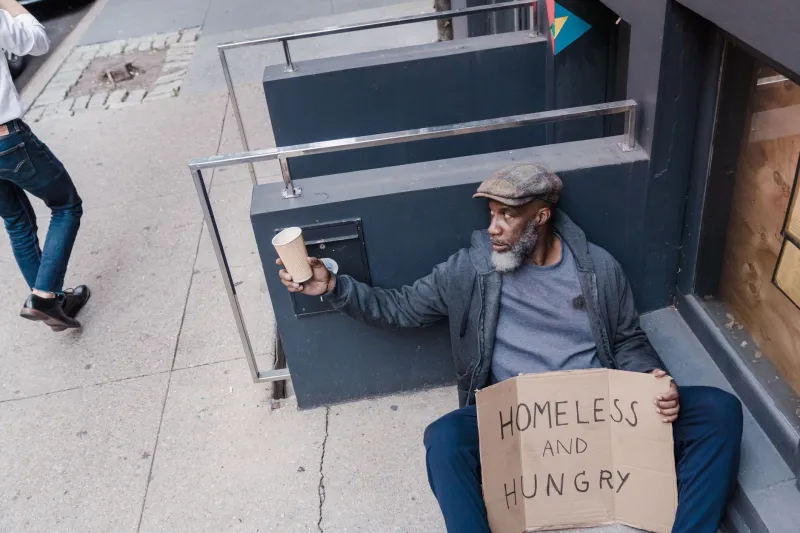
On a Tuesday morning in late winter, Marcus—a 47-year-old man living with HIV—sat in the waiting room of a Bronx community health center, his antiretroviral medications tucked into a small zippered pouch he carries everywhere. He has been unhoused, on and off, for three years. He knows what his doctor needs from him: take one pill every morning, at roughly the same time, without fail. He also knows that when you are sleeping in a shelter that rotates residents every 90 days, or spending nights on a friend's couch with no guarantee of tomorrow, "without fail" is not a phrase that belongs to your life.
"I missed doses because I missed my bag," he said quietly. "Someone took it. When you're in a shelter, things disappear. And when your medication disappears, so does everything you've been working toward."
Marcus's experience is not an outlier. It is a pattern—one that infectious disease clinicians, housing advocates, and public health researchers describe with growing urgency as one of the most consequential and least addressed drivers of HIV treatment failure in New York City.
The Clinical Reality of Unstable Housing
Antiretroviral therapy, or ART, is among the most transformative medical developments of the past half century. When taken consistently, it can suppress HIV to undetectable levels—protecting an individual's immune system and eliminating the risk of sexual transmission to partners. The operative word is consistently.
Dr. Yolanda Ferreira, an infectious disease specialist who works with a federally qualified health center serving low-income patients in upper Manhattan, has watched housing insecurity unravel treatment plans she spent months building with her patients.
"The pharmacological requirements of ART are unforgiving in certain ways," she explained. "Some regimens have a narrow window of efficacy. Miss doses repeatedly, and you risk viral rebound—your viral load climbs, your immune function drops, and in some cases, you begin developing resistance to the medications that were working for you. Housing is not a social determinant of health in the abstract. It is a direct variable in treatment outcomes."
For patients on older regimens or specific formulations that require refrigeration, the stakes are even higher. Without reliable access to a refrigerator—something that a shelter bed, a car, or a stairwell cannot provide—medications degrade before they are ever swallowed.
When Your Prescription Has No Home to Be Delivered To
New York City's pharmacy and prescription delivery infrastructure was not designed with housing insecurity in mind. Mail-order pharmacies, which many insurance plans incentivize or even require for ongoing prescriptions, depend on a fixed mailing address. Patients without one frequently find their medications rerouted, delayed, or simply never received.
Community organizations have attempted workarounds. Several harm reduction and HIV service providers in Brooklyn and the Bronx allow clients to use their office addresses for prescription delivery. But these solutions are patchwork, dependent on organizational capacity, and not universally available. A patient whose primary care provider is in one borough and whose shelter placement is in another faces logistical obstacles that would challenge anyone—let alone someone managing a chronic illness, possible co-occurring substance use, or untreated mental health conditions.
Jamila Okonkwo, a housing advocate with a nonprofit serving LGBTQ+ New Yorkers experiencing homelessness, describes the bureaucratic tangle her clients navigate daily.
"You need an address to get benefits. You need benefits to afford housing. You need housing to maintain your health. And you need your health maintained to hold a job or qualify for certain programs," she said. "It's a loop that people get trapped inside, and HIV just intensifies every pressure point within it."
The Mental Health Dimension No One Talks About Enough
Adherence to antiretroviral therapy is not purely a logistical challenge. It is also a psychological one. Consistent medication-taking requires a degree of routine, self-efficacy, and forward-thinking orientation toward one's own future—all of which are systematically eroded by the trauma of homelessness.
Research has consistently demonstrated that housing instability is associated with elevated rates of depression, anxiety, and post-traumatic stress. Each of these conditions, in turn, is independently associated with lower rates of medication adherence across chronic illness populations. For people living with HIV who are also unhoused, the compounding effect can be clinically catastrophic.
"When you don't know where you're sleeping tonight, taking a pill for your future health is an abstraction that your brain simply cannot prioritize," said Dr. Ferreira. "Survival mode is real. It is neurological. And our treatment models were not built to accommodate it."
Some clinics have responded by integrating behavioral health support directly into HIV primary care—embedding social workers, peer navigators, and mental health counselors within the same visit. But funding constraints and workforce shortages mean these integrated models remain the exception rather than the rule.
What the Data Reveals—and What It Obscures
New York City's annual HIV surveillance reports consistently show that rates of viral suppression are lowest among populations experiencing homelessness and unstable housing. Black and Latino New Yorkers, who already bear a disproportionate burden of HIV diagnoses citywide, are also overrepresented among those experiencing housing insecurity—a convergence that reflects decades of structural disinvestment, discriminatory housing policy, and inequitable access to economic opportunity.
Yet the data, as advocates note, may actually undercount the problem. People without stable housing are less likely to be engaged in regular medical care, which means their viral loads may not be measured at all. Absence from the data does not mean absence from the epidemic.
Housing as Health Infrastructure
The policy argument for treating housing as HIV care infrastructure is not new, but it has gained renewed urgency. Programs modeled on Housing First principles—which provide stable housing without requiring sobriety or treatment compliance as preconditions—have demonstrated measurable improvements in HIV outcomes. When people are housed, they keep appointments. They take their medications. Their viral loads decline.
New York City operates several supportive housing programs specifically for people living with HIV, including units funded through the state's AIDS Institute. Advocates argue these programs, while valuable, remain dramatically underfunded relative to need. Wait lists stretch for months. Eligibility requirements exclude some of the most vulnerable individuals. And the pipeline from homelessness to permanent supportive housing is riddled with gaps that cost people their health—and sometimes their lives.
"We have the evidence. We have the models. What we lack is the political will to scale them," said Okonkwo. "Every dollar we don't spend on housing for people living with HIV, we spend later on emergency care, hospitalization, and the human cost of preventable treatment failure."
The Path Forward
For Marcus, a recent placement in a single-room occupancy unit through a Bronx nonprofit has meant, for the first time in years, a consistent place to keep his medications, a mailing address for his prescriptions, and enough psychological stability to attend his monthly clinic appointments without interruption.
"I haven't missed a dose in four months," he said. "Four months. That doesn't sound like a lot, but for me, it's everything."
His viral load, his doctor recently told him, is undetectable.
Housing did not cure Marcus's HIV. Nothing will. But housing gave him the conditions under which treatment could actually work—conditions that every New Yorker living with this virus deserves, regardless of their income, their zip code, or the circumstances that brought them to this moment.
Until city and state leaders treat stable housing as the essential health intervention it is—not a social service nicety, but a clinical imperative—New York's ambitions to end the epidemic will remain precisely that: ambitions.