From Advocacy to Action: How NYC's LGBTQ+ Centers Are Rewriting the Rules of HIV Prevention
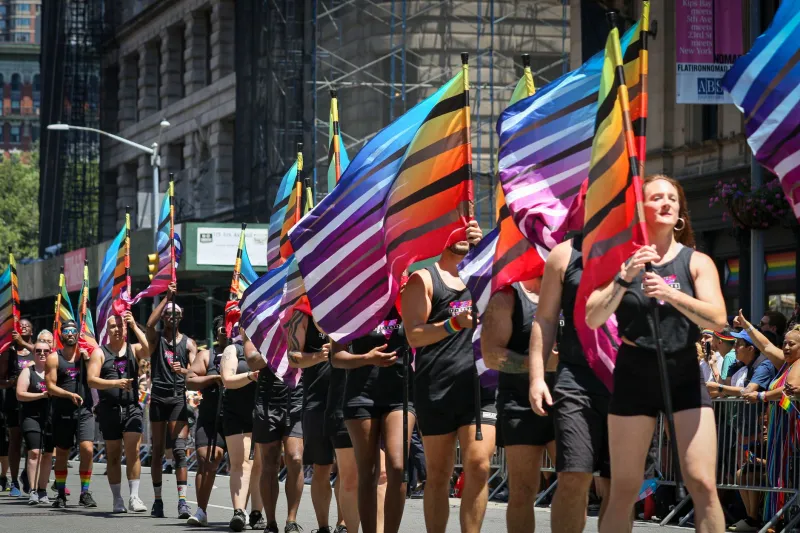
For decades, New York City's LGBTQ+ community centers have served as sanctuaries — places where people could gather, organize, grieve, and celebrate without fear of judgment. Today, many of those same centers are taking on a new and urgent role: delivering frontline HIV prevention services, particularly pre-exposure prophylaxis, to communities that have historically been underserved by the traditional healthcare system.
The shift is neither accidental nor purely administrative. It reflects a deliberate, community-driven recognition that trust, familiarity, and cultural competence are not soft benefits — they are clinical necessities.
A Different Kind of Doctor's Office
Walk into the Callen-Lorde Community Health Center on West 18th Street on a weekday afternoon and you will not find the sterile anxiety of a conventional medical waiting room. The staff greet regulars by name. Multilingual signage lines the walls. A bulletin board advertises everything from mental health workshops to legal aid clinics. PrEP counseling happens in the same building where someone might attend a support group or pick up groceries from a community pantry.
This integration is intentional. "When someone already trusts this space for one part of their life, they are far more likely to take the next step and ask about their sexual health," explains one community health navigator who works with LGBTQ+ youth across three borough-based centers. "We are not asking them to walk into a hospital that has historically made them feel invisible. We are meeting them exactly where they are."
Callen-Lorde has long been recognized as a pioneer in affirming healthcare, but it is far from alone. Across all five boroughs, organizations including the LGBT Network on Long Island, the Bronx's BronxWorks, and Brooklyn Community Pride Center have begun integrating PrEP navigation and sexual health education into their standard programming — often in partnership with the New York City Department of Health and Mental Hygiene.
Why PrEP Still Requires a Champion
PrEP — the daily medication regimen proven to reduce the risk of HIV transmission by up to 99 percent when taken consistently — has been FDA-approved since 2012. Yet despite its effectiveness and the availability of generic formulations, significant disparities in uptake persist across race, income, and geography in New York City.
A 2023 report from the NYC Health Department found that while gay and bisexual men of all backgrounds remain disproportionately affected by new HIV diagnoses, Black and Latino individuals continue to access PrEP at far lower rates than their white counterparts — even within the same neighborhoods. Structural barriers including insurance coverage gaps, provider bias, and the lingering shame associated with HIV prevention all contribute to this inequity.
Community centers are uniquely positioned to dismantle these barriers. Unlike a primary care physician's office, a community center does not require an appointment to walk through the door. It does not generate an insurance claim that a family member might see. It does not require someone to explain their identity, their relationship structure, or their sexual history to a stranger in a white coat before they feel heard.
"PrEP navigation should feel like a conversation, not an interrogation," says one peer health educator at a Queens-based LGBTQ+ center. "When someone comes in nervous, the first thing we do is remind them that they are already doing something brave just by being here."
The Trust Infrastructure
What community centers offer that clinics often cannot is what public health professionals call a "trust infrastructure" — a pre-existing relationship between an organization and the people it serves, built over years of showing up during crises, celebrating milestones, and advocating for rights.
This infrastructure proved especially vital during the COVID-19 pandemic, when many traditional healthcare providers became inaccessible and telehealth created new technological barriers for low-income New Yorkers. Several LGBTQ+ centers pivoted rapidly, offering PrEP refill coordination, harm reduction supplies, and sexual health consultations via phone and, where possible, in-person appointments with enhanced safety protocols.
The lesson was not lost on city health officials. The NYC Department of Health's End the Epidemic initiative has increasingly directed funding toward community-based organizations rather than exclusively toward hospital systems, recognizing that the last mile of healthcare delivery is often the most critical.
Culturally Competent Care Is Not Optional
For transgender New Yorkers, people of color, immigrants, and individuals experiencing housing instability, culturally competent care is not a luxury amenity — it is the difference between accessing care and walking away.
Several centers have hired staff who reflect the demographics of the communities they serve, ensuring that conversations about PrEP, sexual health, and HIV status can happen in Spanish, Mandarin, Haitian Creole, or American Sign Language. Some have embedded PrEP education within existing programming such as youth leadership workshops, drag performance events, and cultural heritage celebrations — normalizing HIV prevention as one thread in a broader fabric of community wellness.
"We do not separate someone's sexual health from the rest of their life," says one program director at a Harlem-based health and wellness center with deep roots in the Black LGBTQ+ community. "HIV prevention is connected to housing, to employment, to mental health, to joy. When we treat it that way, people actually engage."
What New Yorkers Can Do Right Now
If you are a New Yorker who is sexually active and not currently on PrEP, a community center may be the most accessible first step toward understanding your options. Many centers offer free or low-cost PrEP navigation services, meaning a trained advocate can help you understand insurance coverage, connect you with a prescribing provider, and support you through the process of starting and maintaining the medication.
For those already on PrEP, community centers offer ongoing support including adherence counseling, regular STI testing, and connection to mental health services — all of which contribute to long-term prevention success.
New York City's 311 service and the NYC Health Department's GetPrEP website can help residents locate the nearest community-based PrEP navigation program. AIDS NYC also maintains an updated directory of affirming providers and community health resources across all five boroughs.
A Model Worth Scaling
The integration of PrEP services into LGBTQ+ community centers is not simply a workaround for a broken healthcare system — it is a model that has demonstrated measurable success in reaching people who would otherwise go without prevention. It is a model built on the radical premise that healthcare works best when it is rooted in community, delivered with dignity, and designed with the people it serves in mind.
New York City has long prided itself on being a leader in the fight against HIV. Sustaining that leadership in 2024 and beyond requires investing not just in pharmaceutical innovation but in the human infrastructure of trust. Our community centers have already built that infrastructure. The opportunity before us is to resource it fully — and to let it lead.