After the Diagnosis: Reclaiming Desire, Trust, and Intimacy When HIV Changes Everything

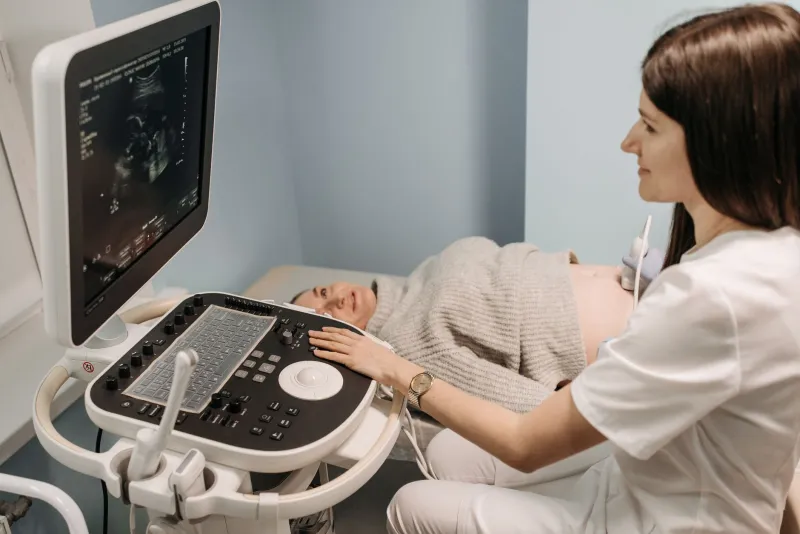
Photo: Пославский, CC BY-SA 3.0, via Wikimedia Commons
The phone call, the clinic visit, the quiet moment in a waiting room when a number on a lab result rearranges your understanding of yourself—for many New Yorkers, an HIV diagnosis does not arrive as a medical event alone. It arrives as a rupture. And for a significant number of those individuals, the first casualty is not their health. It is their sense of themselves as someone worthy of intimacy.
The science, in many respects, has never been more reassuring. Decades of research have established that people living with HIV who maintain an undetectable viral load through consistent antiretroviral therapy cannot sexually transmit the virus to their partners. The Undetectable = Untransmittable principle—U=U—has been affirmed by the Centers for Disease Control and Prevention, the World Health Organization, and virtually every major HIV research institution. In New York City, where access to treatment remains more robust than in most American cities, a growing number of residents are living long, healthy lives with HIV.
And yet, for many of those same New Yorkers, the question of how to be intimate again—how to tell a partner, how to trust someone with that information, how to feel desirable rather than dangerous—remains largely unanswered by the healthcare system that handed them their diagnosis.
The Emotional Architecture of Disclosure
Disclosure is rarely a single conversation. For people living with HIV, it is a recurring calculus: how much to say, when to say it, and to whom. The decision is shaped not only by personal courage but by the very real social and legal context in which it occurs.
New York State law does not criminalize HIV non-disclosure in the same punitive terms as many other states, but the fear of rejection, judgment, and social isolation remains a powerful deterrent. Therapists who work with HIV-positive clients in New York City describe a pattern they encounter frequently: individuals who are medically stable, adherent to treatment, and clinically undetectable—yet who have withdrawn from dating, sex, or romantic connection entirely.
"There's a kind of protective isolation that sets in," says one licensed clinical social worker who has provided HIV-informed therapy in Brooklyn for over a decade. "People would rather remove themselves from the equation than risk being rejected or stigmatized. They've internalized a version of themselves as a threat, even when the science says the opposite."
The gap between what the medicine says and what a person feels is not a failure of information. It is a reflection of how deeply stigma operates—not just externally, through the attitudes of potential partners, but internally, through the stories people tell themselves about their own worth.
Long-Term Partnerships and the Shifting Terrain
For those who receive a diagnosis while already in a relationship, the challenges take a different shape. The immediate questions—how did this happen, what does it mean for us, what does it mean for you—can destabilize partnerships that seemed secure. Couples counselors in New York who specialize in HIV-affected relationships describe the period immediately following a diagnosis as one of the most delicate and consequential in a relationship's life.
Trust, already a fragile architecture in any partnership, can fracture under the weight of assumptions and fears. Some couples navigate this rupture and emerge with a more explicit and communicative relationship than they had before. Others do not survive it. What distinguishes these outcomes, according to relationship counselors, is rarely the diagnosis itself—it is the quality of support available to the couple in the immediate aftermath.
Yet that support is inconsistently offered. Many HIV clinics in New York City excel at addressing viral load, CD4 counts, and medication adherence. Fewer have integrated couples counseling, sexual health therapy, or relationship support into their standard care models. Patients who need that kind of help are often referred out—sometimes to providers with little training in HIV-specific concerns, sometimes to no one at all.
Desire After Diagnosis: Rebuilding a Sexual Identity
For newly diagnosed individuals who are single, the path back to sexual confidence is often longer and lonelier. Dating apps and hookup culture in New York City can feel like a minefield: status disclosure fields, the loaded language of "clean" and "DDF" (drug and disease free) that still circulates in some communities, and the persistent anxiety about how and when to have the conversation.
Community organizations across the five boroughs have stepped into some of this space. Support groups specifically for HIV-positive individuals—facilitated by peers who have navigated these questions themselves—offer something that a clinical appointment rarely can: the lived testimony of someone who has disclosed to a partner, been rejected, tried again, and built a fulfilling intimate life anyway.
"The most powerful thing I ever heard in a support group," one HIV-positive New Yorker in their late thirties recalled, "was someone saying, 'The right person will not leave.' It sounds simple. But when you've been sitting with this diagnosis alone, that sentence can change everything."
Sex-positive therapy, which approaches sexual health as an integral component of overall wellbeing rather than a peripheral concern, has gained traction in New York City's mental health landscape. Therapists trained in this framework work with HIV-positive clients not only on disclosure anxiety but on the broader reclamation of desire—helping individuals reconnect with their bodies, their pleasure, and their sense of themselves as full sexual beings.
What the Healthcare System Is Still Getting Wrong
The clinical encounter, for all its importance, remains an inadequate venue for these conversations. Appointment times are short. Providers are focused on measurable outcomes. And the culture of many HIV clinics, despite genuine progress, still tends to treat sexual health as a matter of risk management rather than human flourishing.
This framing does harm. When sexual health education after an HIV diagnosis centers exclusively on transmission prevention—condom use, viral load, partner notification—it implicitly positions the HIV-positive person as a vector to be contained rather than a whole person with desires, relationships, and a right to a fulfilling intimate life. The U=U message, powerful as it is, is most liberating when it is delivered not merely as a data point but as an affirmation: you are not a danger to the people you love.
Advocates in New York City have been pushing for a more integrated model—one in which sexual health counseling, mental health support, and relationship resources are woven into HIV care from the moment of diagnosis. Some community health centers in the Bronx, upper Manhattan, and Brooklyn are beginning to move in this direction, embedding social workers and peer counselors into their HIV care teams. The progress is real, but uneven.
Building a Life That Includes Love
The New Yorkers who have navigated this terrain most successfully tend to share a few things in common: access to knowledgeable, affirming healthcare providers; connection to community—whether through support groups, advocacy organizations, or peer networks; and at least one person in their life who responded to their disclosure with something other than fear.
None of that should be a matter of luck. The infrastructure of HIV care in New York City is extensive and, in many respects, world-class. But a world-class response to HIV must include the full person—not just the virus, but the life that person is trying to build around it.
Intimacy, desire, and love are not luxuries. They are central to human health and dignity. For New Yorkers living with HIV, the right to pursue them—openly, honestly, and without shame—is not a clinical footnote. It is the point.
If you are living with HIV and seeking support around relationships, sexual health, or disclosure, AIDS NYC maintains a directory of affirming therapists, peer support groups, and community resources across all five boroughs. You do not have to navigate this alone.