Still Here: The Long-Term HIV Survivors Aging in a City That Never Planned for Them

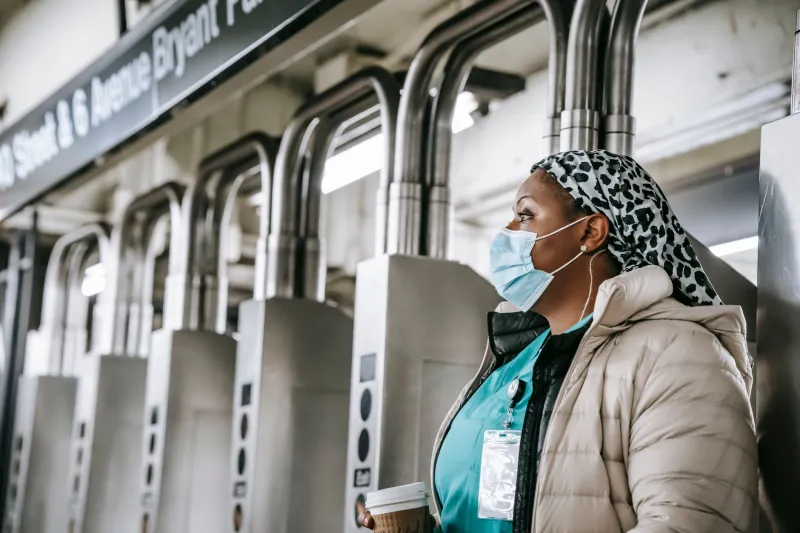
Photo by Photo by Sam Jotham Sutharson on Unsplash on Unsplash
Rodrigo has lived in the same rent-stabilized apartment in the East Village since 1987. He has outlived two partners, a generation of friends, and more than a few physicians. He is 67 years old, has been HIV-positive for thirty-one years, and is, by any clinical measure, doing well. His viral load is undetectable. He takes his medications without fail. And yet, in the past two years, he has been hospitalized three times—once for a cardiac event, once for a fall that fractured his wrist, and once for a depressive episode severe enough to require inpatient care.
"Nobody talks about what it's like to get old with this," he says. "Everyone is so happy you survived. But surviving is its own kind of complicated."
Rodrigo's experience is not unusual. Across New York City, a generation of long-term HIV survivors is moving into their sixties, seventies, and beyond—and encountering a convergence of challenges that neither the HIV care system nor the broader aging services infrastructure was designed to address.
A Population That Wasn't Supposed to Exist
In the early years of the AIDS crisis, long-term survival was not a planning assumption. The medical establishment, the social services system, and even the advocacy community organized around acute care, crisis response, and, eventually, the desperate search for effective treatment. The idea that people diagnosed in the late 1980s and early 1990s might someday need geriatric care, Medicare navigation assistance, or support with activities of daily living was, for most of that era, simply not on the table.
Effective antiretroviral therapy changed everything. But while the medications extended lives, the systems surrounding those lives did not evolve at the same pace. Today, people over 50 represent more than half of all Americans living with HIV—a demographic reality that has arrived faster than most institutions were prepared to absorb.
In New York City, the numbers are significant. The city's HIV surveillance data consistently shows that older adults constitute a growing share of people in care, with a substantial proportion having lived with the virus for two decades or more. These are not simply older adults who happen to have HIV. They are a distinct population, shaped by a specific history of trauma, medical intervention, and survival—and they have needs that do not map cleanly onto either HIV care protocols or standard geriatric medicine.
The Body Keeps the Score—and So Does the Virus
Decades of HIV infection and antiretroviral treatment exact a cumulative toll on the body that researchers are still working to fully understand. Long-term survivors experience elevated rates of cardiovascular disease, bone density loss, kidney dysfunction, and neurocognitive changes at ages younger than their HIV-negative peers. Conditions typically associated with people in their seventies and eighties are appearing in HIV-positive individuals in their fifties.
This accelerated aging is not simply a side effect of medication. Chronic inflammation—a hallmark of HIV infection even when the virus is well-controlled—appears to drive biological aging at a cellular level. The implications for clinical care are substantial: a 58-year-old long-term survivor may present with the medical complexity of a 70-year-old, requiring care coordination across cardiology, nephrology, neurology, and infectious disease simultaneously.
Yet most HIV care providers are not geriatricians, and most geriatricians have limited experience managing HIV. The result is a clinical gap that falls directly on patients to bridge—often without the cognitive, financial, or social resources to do so effectively.
Housing as a Health Crisis
For many long-term survivors in New York City, the housing situation is as urgent as any medical concern. The city's affordable housing crisis has hit this population with particular force. Rent-stabilized apartments—the financial lifeline for many survivors who have lived in the same neighborhoods since before their diagnosis—are under constant threat from deregulation, landlord harassment, and the slow erosion of tenant protections.
Survivors who were too ill to work during the worst years of the epidemic may have spent decades on fixed incomes, accumulating little in the way of savings or retirement security. Those who did work often did so in fields—arts, hospitality, service industries—that offer minimal pension benefits. Social Security Disability Insurance, which many accessed during periods of illness, can create complex financial situations as health improves and work becomes possible again.
The prospect of aging in place—remaining in one's home and community as physical and cognitive needs increase—is a goal that most long-term survivors share and that most cannot count on achieving without support. Home-based care services, accessible apartment modifications, and community health worker programs are all pieces of that puzzle. In New York, those services exist but are fragmented, inconsistently funded, and frequently inaccessible to people who lack the knowledge or energy to navigate the application processes.
The Silence Around Isolation
Perhaps the least visible dimension of long-term survivor aging is social isolation. This generation lost, in many cases, entire social networks to the epidemic. Friends, partners, chosen family—the people who would, under ordinary circumstances, form the informal care infrastructure of aging—are gone. Survivors who relocated to New York during the epidemic's height may have little connection to families of origin, particularly if those relationships were fractured by the stigma and rejection that many LGBTQ+ people of that generation experienced.
Isolation is not merely a quality-of-life concern. It is a documented health risk, associated with increased rates of depression, cognitive decline, and premature mortality. For long-term survivors, who already carry elevated rates of depression, anxiety, and PTSD from decades of accumulated trauma and loss, isolation compounds an already serious mental health burden.
Organizations including SAGE, the services and advocacy group for LGBTQ+ elders, and Housing Works have developed programming specifically aimed at long-term HIV survivors. Peer support groups, community meals, and social engagement programs provide meaningful connection for those who can access them. But demand consistently outpaces capacity, and geographic barriers mean that survivors in the Bronx, Staten Island, or outer Queens may have little practical access to programs concentrated in Manhattan.
Rethinking What Care Looks Like
Advocates working with aging HIV-positive New Yorkers are increasingly clear about what a responsive system would require. It would mean training HIV care providers in geriatric medicine and training geriatricians in HIV. It would mean building housing preservation strategies that specifically account for the needs of long-term survivors on fixed incomes. It would mean funding peer support and social engagement programs at a scale commensurate with the population's size and need.
It would also mean listening. Long-term survivors have spent decades advocating for their own lives—demanding treatment access, fighting stigma, building community in the face of institutional abandonment. They are not passive recipients of care. They are experts in their own survival. Any system that hopes to serve them well must begin by taking their knowledge seriously.
Rodrigo puts it plainly: "We already did the hard part. We stayed alive. Now we just need the city to meet us where we are."
That is not an unreasonable ask. It is, in fact, the very least that New York owes the people who survived its darkest chapter—and who are still, against all odds, here to tell it.