Beyond the Clinic Walls: The Peer-Led Harm Reduction Networks Quietly Keeping New Yorkers Alive
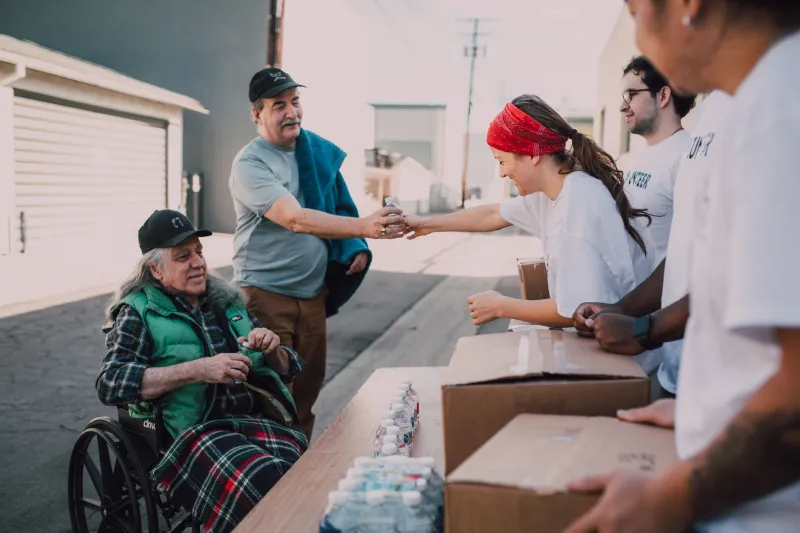
On a Tuesday evening in the South Bronx, a folding table is set up near a transit hub. There are no signs, no banners, and no official affiliation listed anywhere. A small group of people—most of them formerly incarcerated, several living with HIV—distribute clean syringes, fentanyl test strips, naloxone kits, and wound care supplies to a steady stream of neighbors. Nobody is turned away. Nobody is asked for identification. The exchange takes perhaps three minutes per person, and it happens every week, rain or shine, whether the city pays attention or not.
This is harm reduction as it actually exists in New York City in 2024: not as a policy talking point or a line item in a mayoral press release, but as a fragile, underfunded, and often legally precarious practice carried out by people who have decided that waiting for institutions to act is a death sentence.
What the Official System Leaves Behind
New York State has formally recognized harm reduction as a public health strategy for decades. The state's syringe service programs—known as SSPs—are legal, licensed, and have been shown repeatedly to reduce HIV transmission, hepatitis C infection, and overdose mortality. The evidence is unambiguous. The Centers for Disease Control and Prevention, the World Health Organization, and virtually every major public health body endorse these interventions without qualification.
And yet, the people most at risk are frequently the least likely to access them.
Licensed SSPs operate during business hours, require registration in some cases, and are concentrated in neighborhoods where advocacy organizations have historically had the resources to maintain a physical presence. For people experiencing homelessness, those cycling through the city's shelter system, individuals recently released from Rikers Island, or undocumented immigrants terrified of any institutional contact, the official network is often functionally inaccessible. The gap between what the system promises and what it delivers is not a bureaucratic oversight. For many advocates, it is a structural feature.
"The programs that exist are real and they do important work," says one longtime harm reduction organizer in East Harlem who asked not to be identified by name. "But they were never designed to reach everyone. And the people they don't reach are exactly the people dying."
The Architecture of the Underground
The informal networks filling this void are not monolithic. They range from loose coalitions of individuals who coordinate via encrypted messaging apps to more organized collectives with volunteer rosters, supply chains, and rudimentary training protocols. What unites them is a shared philosophy: that people who use drugs deserve dignity, accurate information, and material support regardless of whether they are ready, willing, or able to engage with formal treatment systems.
Drug checking services—in which people can bring substances to be tested for fentanyl, xylazine, and other adulterants before use—represent one of the more legally fraught corners of this landscape. New York State decriminalized fentanyl test strips in 2021, a genuine policy victory. But the broader practice of drug checking, which may involve reagent testing or spectrometry equipment, exists in a murkier legal space. Peer workers doing this work are often acutely aware that their activities, however life-saving, could expose them to criminal liability.
Wound care is another critical and largely invisible service. People who inject drugs frequently develop abscesses, cellulitis, and serious soft tissue infections. Without treatment, these conditions can become life-threatening. Emergency rooms are available in theory, but for people with outstanding warrants, histories of stigmatizing treatment by medical staff, or simply no health insurance, the ER is not a realistic option. Peer workers trained in basic wound care—cleaning, dressing, and monitoring infections—often serve as the first and only line of medical intervention these individuals receive.
For people living with HIV in this population, the stakes are compounded. Untreated infections can accelerate immune decline. Missed antiretroviral doses during periods of housing instability or active substance use can lead to viral rebound. The informal networks understand this intersection intimately, and many have developed specific protocols for helping HIV-positive individuals maintain some continuity of care even during the most chaotic periods of their lives.
Why the System Continues to Fail
The persistence of these underground networks is not evidence of a thriving civil society filling a temporary void. It is evidence of a sustained institutional failure.
Funding for harm reduction in New York City has improved in recent years, but it remains chronically insufficient relative to the scale of need. Licensed programs frequently struggle to maintain staffing, and the peer workforce—the people most trusted by the communities being served—is often paid poverty wages or not compensated at all. When programs lose funding, they close. The communities they served do not disappear; they simply go without.
Political will is also inconsistent. Harm reduction has faced persistent opposition from elected officials and community groups who conflate service provision with condoning drug use—a framing that public health professionals have spent decades dismantling without fully succeeding. The result is a policy environment in which evidence-based interventions are simultaneously endorsed at the state level and quietly starved of the resources needed to function.
For communities of color, this failure carries particular weight. Black and Latino New Yorkers are disproportionately represented among people who inject drugs, among people living with HIV, and among overdose fatalities. The neighborhoods where informal harm reduction networks are most active—the South Bronx, East Harlem, Central Brooklyn, parts of Queens—are the same neighborhoods that have faced decades of disinvestment, over-policing, and inadequate healthcare infrastructure. The people doing this work are not operating in a vacuum. They are responding to conditions that policy has created and sustained.
The People Doing the Work
The organizers and volunteers who sustain these networks rarely seek recognition. Many have personal histories with incarceration, substance use, or HIV that make public visibility feel risky rather than empowering. They operate on the principle that the work matters more than the credit, and that survival is its own form of advocacy.
What they consistently ask for is not praise. They ask for institutional support without institutional control. They ask for funding that does not come attached to surveillance requirements or abstinence-based program conditions. They ask for legal protections that allow them to do this work without fear of prosecution. And they ask that the city and state acknowledge, plainly and without equivocation, that the communities they serve have been failed—and that this failure is not incidental.
New York City has a long and complicated relationship with harm reduction. The first needle exchange programs in this city were themselves underground operations, run by activists who were arrested for doing what is now accepted public health practice. The history suggests that the distance between criminalized and sanctioned can close—but only when those in power are forced to reckon with the human cost of inaction.
That reckoning is overdue.
What Needs to Change
Advocates working in this space have articulated a clear set of demands, even if the political will to meet them remains uncertain. Expanded and sustained funding for peer-led SSPs, with compensation structures that reflect the expertise and risk involved. Legal clarity and protection for drug checking services. Investment in street-based wound care and mobile health units that can reach people where they are. And a genuine commitment to decriminalization frameworks that stop treating poverty and addiction as criminal matters.
For New Yorkers living with HIV who also use drugs, these are not abstract policy questions. They are the difference between viral suppression and viral rebound, between a treatable wound and a life-threatening infection, between another week alive and another name added to a growing list.
The people at that folding table in the South Bronx already know this. The question is whether the institutions that claim to serve them will ever catch up.