Fear as a Pre-Existing Condition: Undocumented New Yorkers With HIV and the Impossible Math of Survival
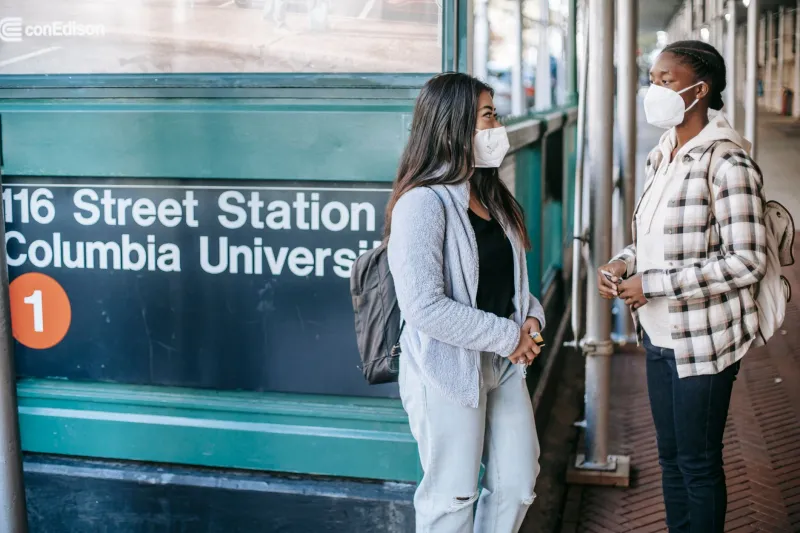
Elena has lived in Queens for nine years. She works, pays rent, raises two children who were born here, and has been managing HIV with antiretroviral therapy for six of those years. She knows which clinic to go to, which subway to take, which pharmacist will not ask questions she cannot safely answer. She has built a careful, functional life around a diagnosis that would have been a death sentence in the Mexican village where she grew up.
But when immigration enforcement activity surged in her neighborhood last year, Elena stopped going to her monthly appointments for three months. Her viral load climbed. Her sleep collapsed. She did not stop caring about her health. She stopped believing she could access it safely.
"I kept thinking, what happens to my kids if I go to the clinic and I don't come home?" she said, speaking through an interpreter at a community health fair in Jackson Heights. "There's no answer to that question that makes it okay to go."
Elena's situation is not exceptional among undocumented immigrants living with HIV in New York City. It is the norm — a daily calculus in which medical need is weighed against existential risk, and in which fear itself functions as a barrier to care as effectively as any insurance denial or appointment waitlist.
The Intersection of Two Stigmas
Undocumented status and HIV diagnosis carry independent and compounding stigmas. Each alone can isolate a person from community, family, and formal support systems. Together, they create a profile of vulnerability that the city's healthcare and social service infrastructure is poorly equipped to address.
Many undocumented immigrants living with HIV in New York come from countries where HIV stigma remains intense and medicalized, where disclosure can result in family rejection, and where legal protections for people living with the virus are minimal or nonexistent. Arriving in the United States does not erase that history. It overlays it with new fears — of deportation, of data sharing between agencies, of what happens to a medical record in the wrong hands.
Those fears are not irrational. Federal immigration enforcement agencies have, in documented cases, accessed information from contexts that patients understood to be confidential. While New York City has enacted a series of local protections — including executive orders limiting city agencies' cooperation with immigration enforcement — these measures do not fully insulate healthcare settings from federal action, and they do not always reach the community members who most need to know they exist.
The Insurance Gap and Its Consequences
Most undocumented immigrants are ineligible for federally funded Medicaid. In New York State, certain emergency Medicaid provisions exist, and the state's Emergency Medicaid program covers some HIV-related services. But coverage is inconsistent, often requires documentation that undocumented individuals cannot safely provide, and does not extend to the full continuum of HIV care — including mental health services, dental care, and the nutritional support that affects treatment outcomes.
The Ryan White HIV/AIDS Program, which funds care for low-income people with HIV regardless of insurance status, is the most significant federal resource available to undocumented New Yorkers with HIV. Ryan White-funded clinics across the five boroughs — including the Institute for Family Health, Montefiore's AIDS Center, and others — do not require patients to provide immigration documentation to access services. For many undocumented patients, these clinics represent the only reliable point of entry into HIV care.
But Ryan White is chronically underfunded relative to need. Wait times for services are long. Geographic coverage is uneven. And the program's existence is not universally known among the undocumented communities it could serve — a gap that community health workers and patient navigators work constantly, and inadequately, to close.
What Enforcement Does to Treatment
The relationship between immigration enforcement and HIV treatment adherence is direct, measurable, and devastating. Research conducted in cities with elevated enforcement activity consistently shows that undocumented immigrants reduce their healthcare utilization during and after visible enforcement events — even when they are not personally targeted. The community-level fear generated by a single high-profile arrest or workplace raid ripples outward, keeping people who need care from seeking it.
For HIV treatment specifically, this pattern is clinically catastrophic. Antiretroviral therapy requires consistent, uninterrupted adherence to maintain viral suppression. Gaps in treatment — even relatively brief ones — allow viral rebound, increase transmission risk, and can contribute to drug resistance that complicates future treatment options. The three months Elena spent away from her clinic were not a minor disruption. They were a medical setback with long-term consequences that her provider is still working to address.
"I see this constantly," said a physician at a Ryan White-funded clinic in the Bronx who asked not to be named. "A patient who has been undetectable for two years comes back after a gap and their numbers have moved significantly. When I ask what happened, it's almost always fear. Not forgetfulness. Not side effects. Fear."
Community Organizations on the Front Lines
In the space between institutional healthcare and the communities it fails to reach, a network of organizations is doing extraordinary work under constrained conditions. Make the Road New York, the New York Immigration Coalition, and several smaller mutual aid networks provide know-your-rights education, accompaniment to medical appointments, and connections to legal support for undocumented individuals navigating HIV care.
Community health workers — often themselves immigrants with lived experience of the systems they help others navigate — serve as the connective tissue between formal healthcare and the people most reluctant to engage with it. They meet people where they are: at community events, in churches, in laundromats, in the informal networks through which information travels in undocumented communities.
These workers operate with minimal institutional support and significant personal risk. They are the city's most effective HIV outreach resource for undocumented communities, and they are chronically underfunded, underrecognized, and unsupported by the public health infrastructure they are, in effect, supplementing.
What the City Must Do
New York City has made commitments to health equity that are, on paper, among the most expansive in the nation. Fulfilling those commitments for undocumented immigrants with HIV requires more than existing policy — it requires active, visible, and sustained effort to communicate that healthcare settings are safe, that Ryan White services are available regardless of immigration status, and that the city will not allow federal enforcement priorities to determine who receives medical care within its borders.
It requires robust, sustained funding for community health workers and patient navigators who are trusted within undocumented communities. It requires policy advocacy at the state level to expand Medicaid eligibility regardless of immigration status — a change that New York has the authority to implement and the moral obligation to pursue. And it requires healthcare institutions to examine their own intake processes, their data practices, and their staff training to ensure that the environments they create are genuinely accessible to the most vulnerable among us.
Elena is back in care now. Her viral load is moving in the right direction again. She found her way back through a community health worker who knew her neighborhood, knew her language, and knew how to explain — in terms that addressed the fear rather than dismissing it — that her clinic was a place she could return to.
"She came to my door," Elena said. "That's what it took. Someone coming to my door." In a city of eight million people, that should not be the system. But until it changes, it is.