Tested Out of Reach: How HIV Screening Has Vanished From New York's Outer Boroughs
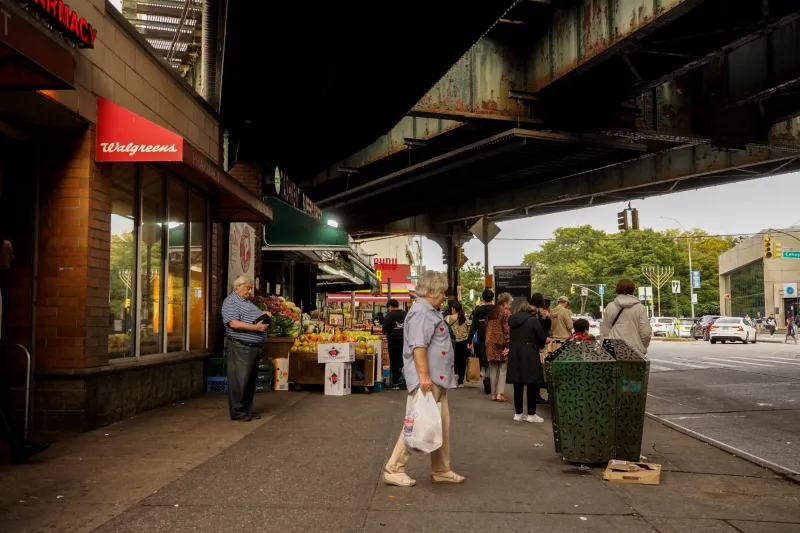
For years, New York City promoted itself as a national model in the fight against HIV — a place where aggressive testing campaigns, expansive clinic networks, and progressive public health policy combined to drive new infection rates steadily downward. That reputation, however, has always rested on an uneven foundation. While Manhattan's density of health resources remained robust, the outer boroughs have grown increasingly underserved. Today, for residents of neighborhoods like Soundview in the Bronx, Far Rockaway in Queens, or Port Richmond on Staten Island, accessing a free or low-cost HIV test has become not merely inconvenient but, in practical terms, nearly impossible.
The term "testing desert" — borrowed from the food access movement — describes any geographic area where residents lack reasonable access to a specific health resource within an acceptable distance or travel time. By that definition, significant portions of New York City's outer boroughs now qualify.
A Network That Was Never Equally Distributed
The HIV testing infrastructure that exists today in New York was largely built during the crisis years of the 1980s and 1990s, when federal funding, philanthropic urgency, and community organizing converged to establish clinics, mobile units, and community health centers across the five boroughs. But that network was never uniformly distributed. Manhattan, particularly lower Manhattan and Midtown, captured a disproportionate share of resources, reflecting both the geography of early advocacy organizations and the concentration of political influence.
As federal HIV/AIDS funding shifted priorities and city contracts were restructured over the past decade, dozens of community-based testing sites in the outer boroughs quietly shuttered. Some were absorbed into larger health systems that lacked the community trust or the flexible hours necessary to serve working-class populations. Others simply closed, their funding streams exhausted, their staff dispersed.
According to data compiled by the New York City Department of Health and Mental Hygiene, the number of publicly accessible HIV testing sites in the Bronx declined by more than a quarter between 2015 and 2023. Similar contractions are documented in southeastern Queens and the North Shore of Staten Island — precisely the neighborhoods where HIV prevalence rates remain elevated and where populations face the greatest structural barriers to care.
The Real Cost of Distance
Maria T., a 34-year-old home health aide living in Hunts Point, describes the experience of trying to get tested after a potential exposure last spring. The nearest site she could identify online was over forty minutes away by bus — two transfers, no direct route. She works six days a week. She has two children. She waited three months before finally locating a mobile testing van operating out of a church parking lot on a Saturday morning.
"Three months," she said. "That's three months I didn't know. Three months where anything could have happened."
Her story is not exceptional. It is representative of the daily calculus facing thousands of New Yorkers in underserved communities — a calculus that weighs the urgency of health information against the concrete demands of time, transportation, and economic survival. Early HIV detection is not merely a clinical matter; it is the gateway to linkage to care, to treatment that can render the virus undetectable and untransmittable, and to the prevention tools — including PrEP — that can protect partners and communities. Every week of delayed testing is a week of delayed possibility.
Closures Without Replacements
The closures driving this crisis did not occur in a vacuum. Many were precipitated by the expiration of Ryan White HIV/AIDS Program grants, which fund a significant portion of community-based HIV services across the country. When those grants lapsed or were reduced, organizations that had operated testing programs for decades found themselves without the resources to continue. The city's Health Department, operating under its own budget constraints, has not consistently backfilled those gaps.
Community health advocates point to a structural failure in how replacement services are planned — or more accurately, how they are not planned. "When a site closes, there is no automatic mechanism that triggers a replacement," explains a program coordinator at a Bronx-based health advocacy nonprofit who requested anonymity due to ongoing contract negotiations with the city. "The assumption seems to be that the market will fill the gap, or that people will travel. Neither assumption holds in communities like ours."
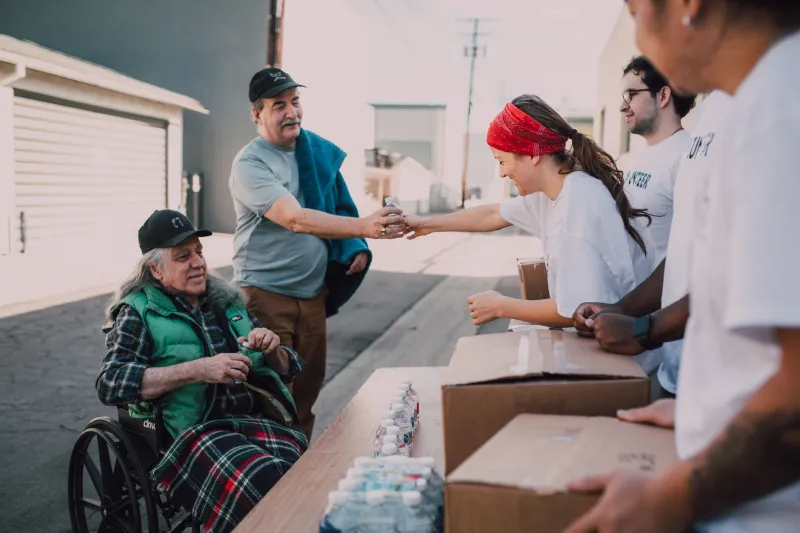
Mobile testing units, often cited as a flexible solution, have their own limitations. They operate on schedules that shift with funding cycles, they are vulnerable to weather and logistical disruptions, and they require community outreach infrastructure to be effective — outreach that is itself chronically underfunded.
What Geography Reveals About Equity
A map of current HIV testing sites in New York City tells a story that statistics alone cannot. The density of available services in Manhattan's core stands in stark visual contrast to the sparse coverage across the outer boroughs. This is not incidental. It reflects decades of investment decisions that have consistently prioritized geographic convenience for policymakers and funders over equitable access for the populations most affected by HIV.
Black and Latino New Yorkers account for the overwhelming majority of new HIV diagnoses in the city. These same communities are disproportionately concentrated in the outer boroughs. The convergence of these two facts — elevated HIV burden and depleted testing infrastructure — in the same geographic spaces is not coincidence. It is the spatial expression of structural inequity.
Advocates at organizations including Housing Works, VOCAL-NY, and the Latino Commission on AIDS have repeatedly raised these concerns with city and state officials, calling for targeted reinvestment in outer-borough testing capacity, extended hours at existing community health centers, and the restoration of mobile unit funding at levels that can sustain consistent, year-round coverage.
What Restoration Would Require
Expanding HIV testing access in New York's outer boroughs is not a technically complex challenge. The interventions are well understood: fund community-based organizations with deep neighborhood roots, establish or restore fixed testing sites with evening and weekend hours, expand mobile unit capacity with stable multi-year funding, and integrate HIV screening into primary care visits at Federally Qualified Health Centers already serving these communities.
What restoration requires, above all, is political will and sustained financial commitment. The New York City Council's HIV/AIDS budget has been subject to repeated cuts and flat-funding cycles that have eroded real-dollar capacity over time. Advocates are calling for a dedicated outer-borough testing initiative, modeled on the city's past "Ending the Epidemic" investments, that explicitly targets geographic disparities rather than simply expanding services where they already exist.
City Council Member Althea Stevens, whose district encompasses parts of the Bronx with some of the highest HIV diagnosis rates in the city, has called the testing desert crisis "a public health emergency hiding in plain sight." She has introduced legislation requiring the Department of Health to conduct an annual geographic audit of HIV testing access and publish remediation plans for identified deserts.
The Stakes of Inaction
New York City has set ambitious goals for ending the HIV epidemic within its borders. Those goals are not achievable if the communities bearing the greatest HIV burden cannot reliably access the first and most fundamental step in the care continuum: knowing their status. Testing is not a luxury. It is not a secondary concern. It is the irreducible foundation upon which every subsequent intervention — treatment, prevention, community health — depends.
For Maria T., and for the thousands of New Yorkers navigating the same fractured landscape, the consequences of inaction are not abstract. They are measured in months of uncertainty, in infections that could have been prevented, in lives altered by a gap in the map that no one in power has yet chosen to close.
New York has the resources, the expertise, and the moral obligation to do better. The question is whether it has the resolve.