What Young New Yorkers Are Never Taught: The Dangerous Silence Around HIV in City Classrooms

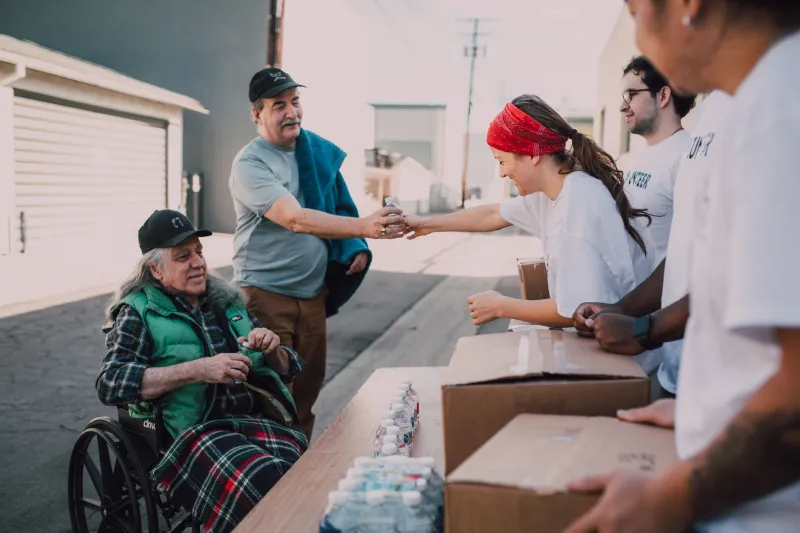
Photo by Photo by Jorge Ramírez on Unsplash on Unsplash
New York City positions itself as a global leader in HIV prevention. The city funds needle exchanges, subsidizes PrEP, and operates some of the most sophisticated public health infrastructure in the country. Yet inside thousands of public school classrooms across the five boroughs, a quieter and more consequential failure is unfolding — one that begins long before a young person ever walks into a clinic or opens a health app.
For many students, the education they receive about HIV is not merely incomplete. It is, in critical respects, wrong.
What the Curriculum Promises — and What It Delivers
New York State law mandates HIV and AIDS instruction as part of health education in public schools. On paper, this sounds like a meaningful commitment. In practice, educators, students, and public health advocates describe a curriculum that frequently reduces HIV to a historical tragedy, a list of transmission routes, and a warning about unprotected sex — with little attention to the prevention tools, treatment realities, or social contexts that actually define the epidemic today.
"We spend maybe two class periods on HIV, and most of it is about how you get it," said one health teacher at a Brooklyn middle school, who asked not to be named for fear of administrative blowback. "Nobody tells me to talk about PrEP. Nobody tells me to explain what 'undetectable' means. I'm working from materials that haven't been meaningfully updated in years."
That experience is not unusual. A review of health education frameworks used in multiple NYC districts reveals that instruction on biomedical prevention — including pre-exposure prophylaxis, or PrEP, and the science behind Undetectable = Untransmittable, or U=U — is largely absent from standardized lesson plans. Students are taught that condoms reduce risk, which is accurate, but they are rarely informed that a person living with HIV who maintains an undetectable viral load cannot sexually transmit the virus. That omission alone perpetuates stigma with measurable consequences.
The Abstinence Shadow
For communities in more conservative-leaning neighborhoods, the problem is compounded by the lingering influence of abstinence-centered instruction. While New York State officially prohibits programs that teach abstinence as the only option, advocates say the spirit of that prohibition is routinely undermined in practice.
"There's a version of HIV education that technically mentions condoms but spends far more time emphasizing abstinence as the 'safest' choice," said a sexual health advocate who works with youth programs in the Bronx. "That framing is not neutral. It communicates to young people that any sexual activity is inherently dangerous, which makes them less likely to seek out information or services when they do become sexually active — which they will."
Research consistently shows that abstinence-only or abstinence-first approaches do not delay sexual debut and are associated with lower rates of contraceptive use among adolescents. When applied to HIV education specifically, such approaches can actively discourage students from accessing the very prevention tools — PrEP, condoms, regular testing — that the city's public health system is investing in.
Young People Speaking for Themselves
The students navigating these gaps are not passive recipients of whatever information filters through to them. Many are actively seeking answers — and finding them in places that carry no quality guarantee.
"I learned more about HIV from TikTok than I ever did in school," said a 19-year-old from Queens who is now enrolled at a City University of New York campus. "And some of what I learned on TikTok was wrong. I genuinely believed for a long time that you could get HIV from sharing a drink. Nobody corrected that."
That kind of misinformation — that HIV is transmitted through casual contact — remains stubbornly common among young people, despite decades of public health messaging to the contrary. When school curricula fail to explicitly and repeatedly correct these misconceptions, they become entrenched. The social cost is not abstract: stigma built on false beliefs shapes how young people treat peers who are living with HIV, how they respond to their own potential exposures, and whether they feel safe disclosing their status or seeking testing.
What Comprehensive Looks Like — and Why It's Rare
Experts in adolescent sexual health are clear about what effective HIV education requires. It must be medically accurate and current. It must address the full range of prevention options, including PrEP, post-exposure prophylaxis (PEP), and consistent condom use. It must present people living with HIV as full human beings rather than cautionary figures. And it must be delivered in a way that is affirming of diverse sexual orientations and gender identities — because young LGBTQ+ New Yorkers face disproportionate HIV risk and are frequently rendered invisible by curricula that default to heterosexual framing.
"A gay or bisexual young man sitting in a sex ed class that only talks about HIV in terms of heterosexual transmission is not getting HIV education," said a public health researcher who studies adolescent sexual health outcomes in urban environments. "He's getting a lesson in his own invisibility."
Some schools and community organizations are working to fill these gaps independently. Several community health centers across Manhattan, Brooklyn, and the Bronx have developed youth-facing programs that cover PrEP access, testing resources, and stigma reduction in ways that school curricula do not. But these programs reach a fraction of the students who need them, and they should not have to exist as a corrective to what classrooms are failing to do.
A Policy Problem Requiring a Policy Solution
The silence in NYC classrooms around contemporary HIV prevention is not the result of individual teacher failure. It is a structural problem — one rooted in underfunded health education departments, inadequately trained educators, outdated instructional materials, and a political environment in which comprehensive sexual health instruction is still treated as controversial rather than essential.
Advocates are calling on the New York City Department of Education to mandate updated, evidence-based HIV curriculum standards that reflect the current science of prevention and treatment. They are calling for professional development that equips health teachers with accurate, up-to-date knowledge — including the science of U=U, the availability of PrEP for adolescents, and the importance of affirming LGBTQ+ identities in health instruction. And they are calling for accountability mechanisms that ensure these standards are actually implemented in classrooms, not merely codified in policy documents.
New York City has made genuine progress in the fight against HIV. New diagnoses have declined. Treatment access has expanded. The city's public health apparatus has demonstrated, at its best, what political will and adequate resources can accomplish.
But that progress stops at the schoolhouse door. And until the education system is held to the same standard of care that public health advocates have fought to establish in clinics and community centers across the five boroughs, a generation of young New Yorkers will continue to make consequential decisions about their health with information that is incomplete, distorted, or decades out of date.
They deserve better. The city that claims to lead on HIV must prove it — starting in the classroom.